clear

POPULAR CONTENT
HISTORY
|Clear All History
Engine Parts

Clear All History
December 18, 2025 · 8 min read
From the 2,000+ components in a gas guzzler to the simplicity of electric motors—here is the number every car owner needs to know.
Most drivers look under the hood and see one big, vibrating block of metal. They treat the engine as a single unit.
When you view your engine as a single object, you become vulnerable at the mechanic shop. If you don't understand that your engine is actually a symphony of thousands of tiny, interdependent components, a quote for a "manifold gasket" or a "camshaft sensor" sounds like gibberish—and gibberish is expensive. Not knowing the complexity of your vehicle leads to poor maintenance habits and overpaying for repairs.
We are peeling back the layers. Whether you drive a classic Ford Mustang or a modern hybrid, we are breaking down the exact part counts to help you understand the engineering marvel sitting in your driveway.
If you want the quick "featured snippet" answer: An average internal combustion engine (ICE) contains roughly 2,000 distinct parts.
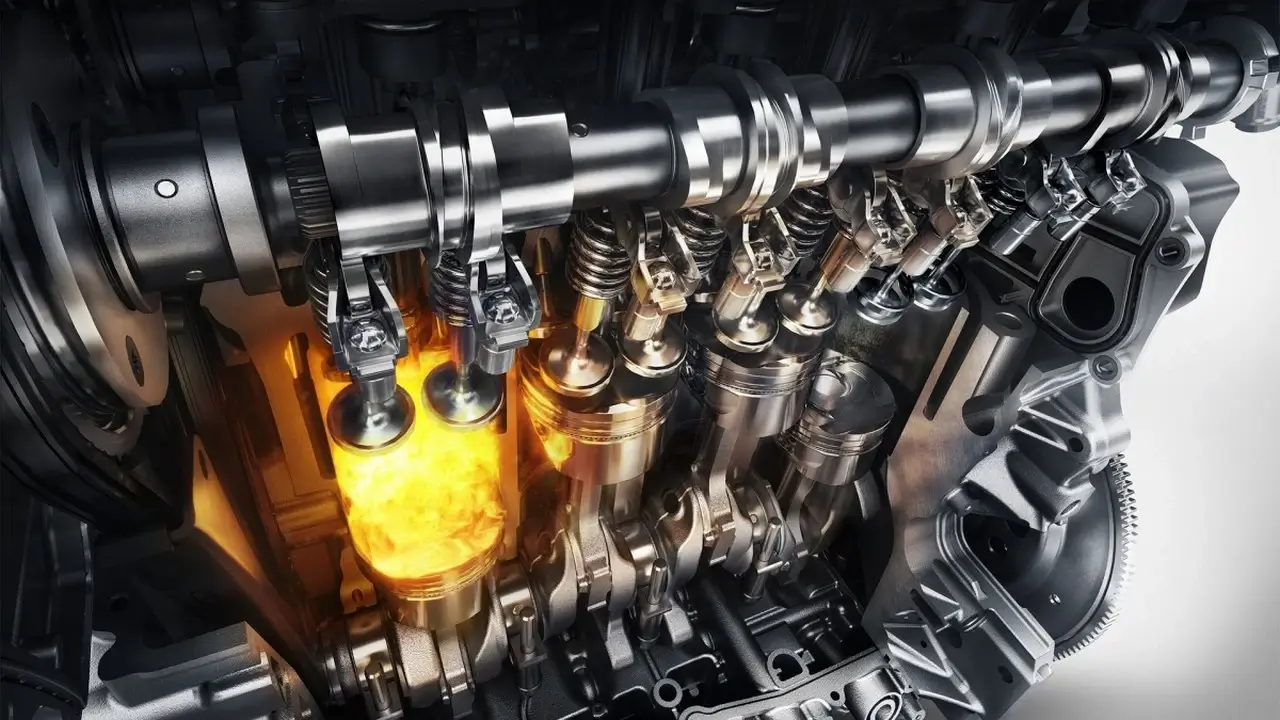
Because engines range from simple single-cylinder designs to complex V12s or turbo diesels, the total count of parts varies widely. Automotive experts note that even a common 4-cylinder engine contains “well over 100 moving parts,” including the crankshaft, four pistons and rods, and dozens of valves and spring. In fact, a modern four-cylinder engine may have over 200 distinct parts. Larger engines (V6, V8, diesel trucks) add yet more – often doubling or tripling the counts of each subsystem, scaling up with cylinder count and technology.
However, there is a nuance. Engineers often distinguish between:
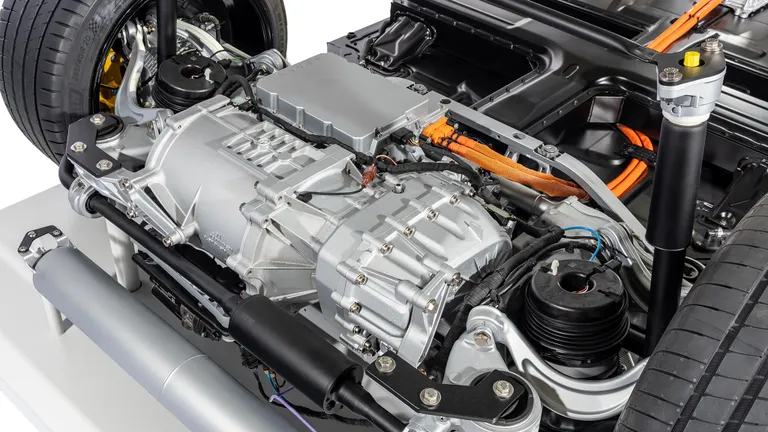
Note: In late 2025, as EVs dominate more market share, this number is changing drastically. An electric motor often has fewer than 20 moving parts.
These are the heavyweights that hold everything together. They don't move, but they endure extreme heat and pressure.
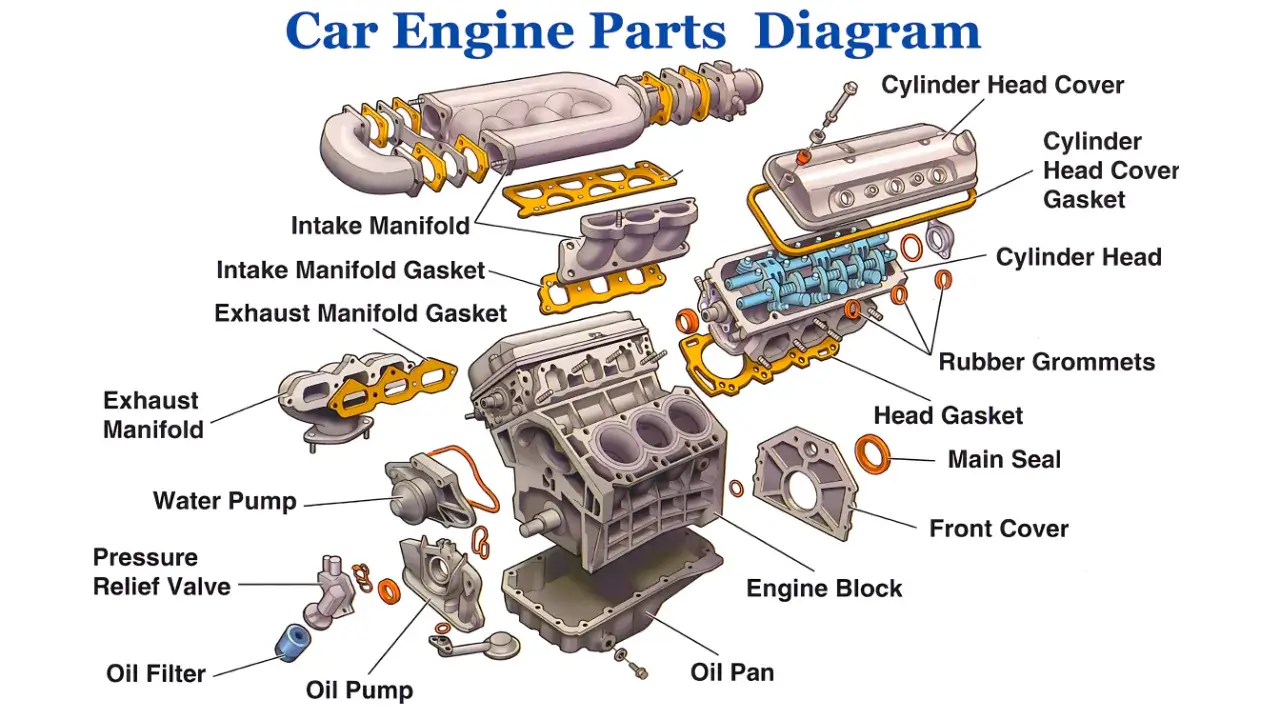
Without these 3 massive structural components, the other 1,997 parts have nowhere to go.
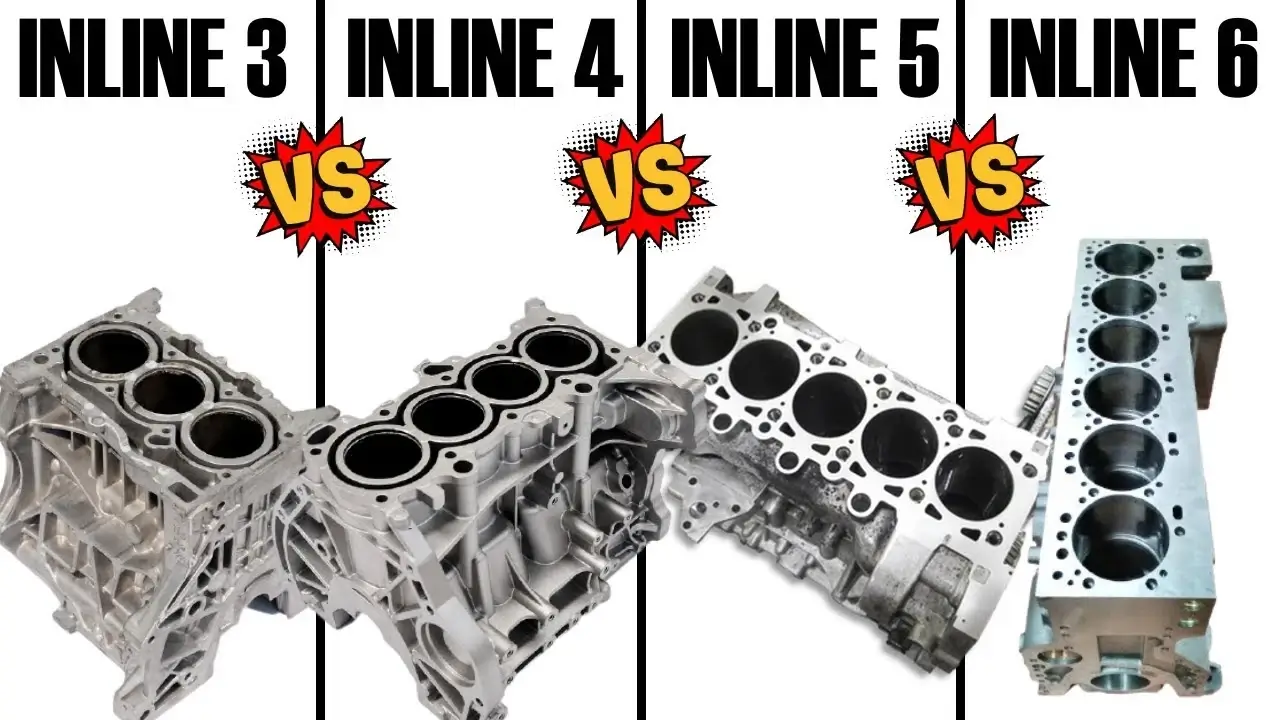
1 engine block + 1 cylinder head. (A V6/V8 would have 1 block + 2 heads.)
Inside the block are pistons—one per cylinder—that move up/down in the bores. Pistons are attached to connecting rods, which link to the crankshaft at the bottom of the block.
Also within the block are many bearings, pins, and bushings (often dozens of separate pieces) that enable the crankshaft and rods to move smoothly.
Key parts count (core structure): Typically 1 engine block, 1 head, 1 crankshaft, plus n pistons and n rods for n cylinders. For example, an I4 has 1 block + 1 head + 1 crank + 4 pistons + 4 rods (and usually 4×3=12 piston rings). Even at this “core” level, a 4-cyl engine easily has ~22 large parts (plus rings, caps, etc)
This is where the magic (and the friction) happens. When mechanics talk about "internal engine damage," they usually mean one of these:
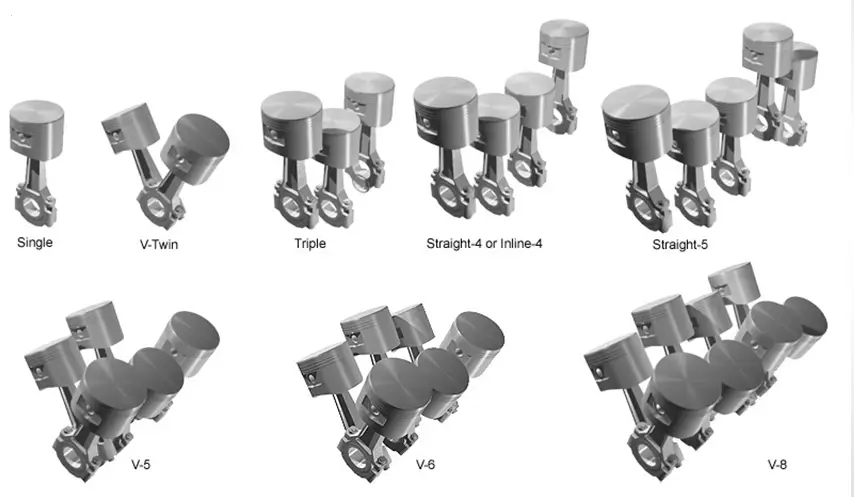
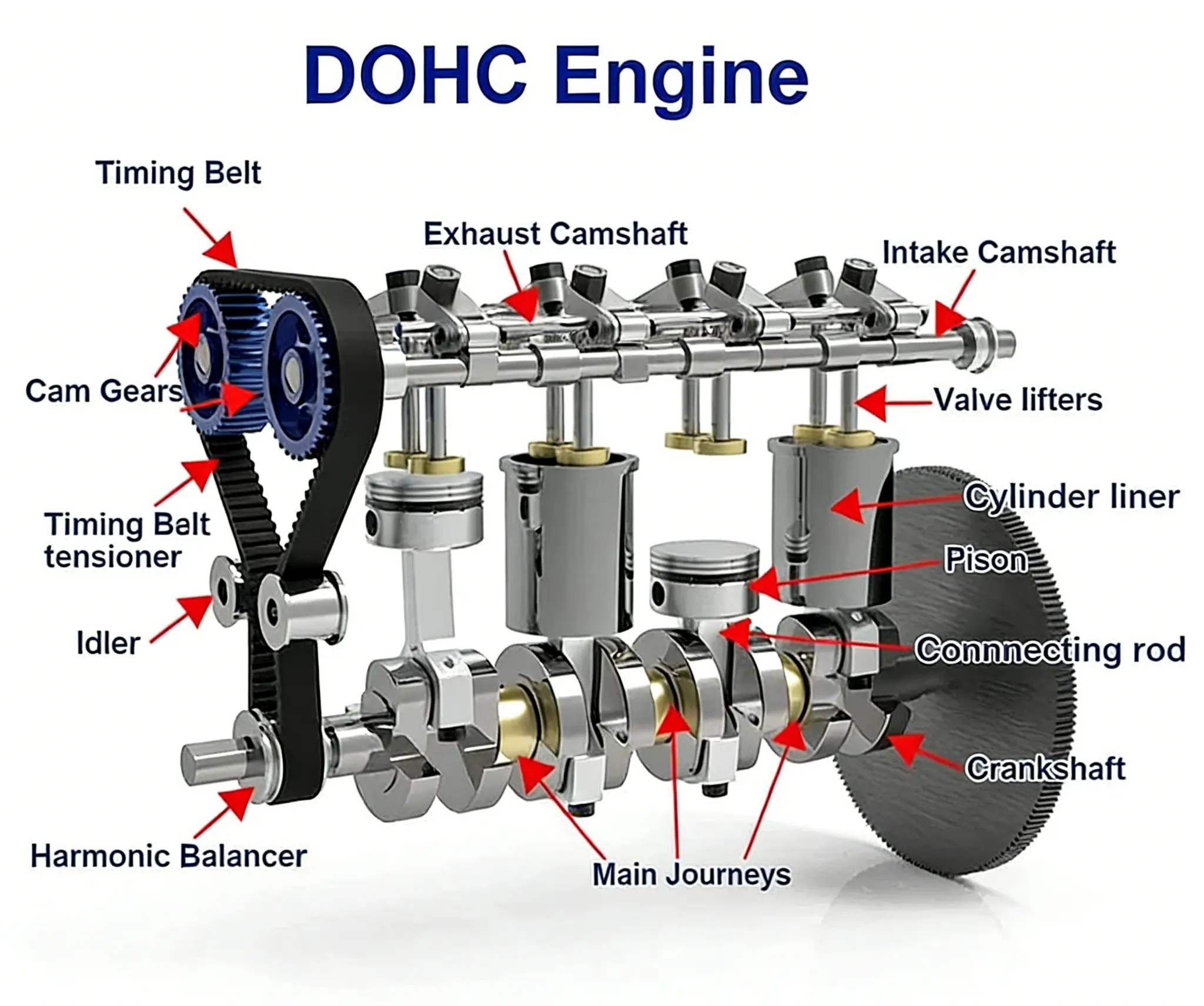
Without these parts the engine wouldn’t create any motion. In terms of parts count, a 4-cyl rotating assembly includes roughly 1 crank + 4 pistons + 4 rods + ~12 rings + ~5 caps + dozens of bearings. In total that is on the order of 30–40 individual pieces just to form the bottom end. Modern engines often add a balancer shaft or two (each an extra shaft with bearings) for smoothness, and timing chain sprockets/gears to drive the camshafts – more gears/bearings.
An engine is as much computer as it is mechanical. A modern engine includes dozens of sensors that weren't there 30 years ago.
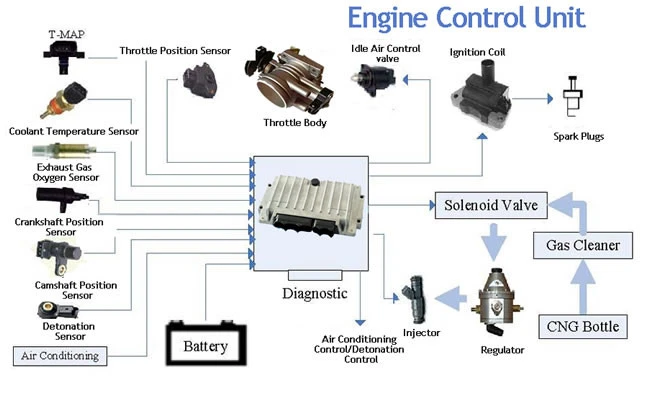
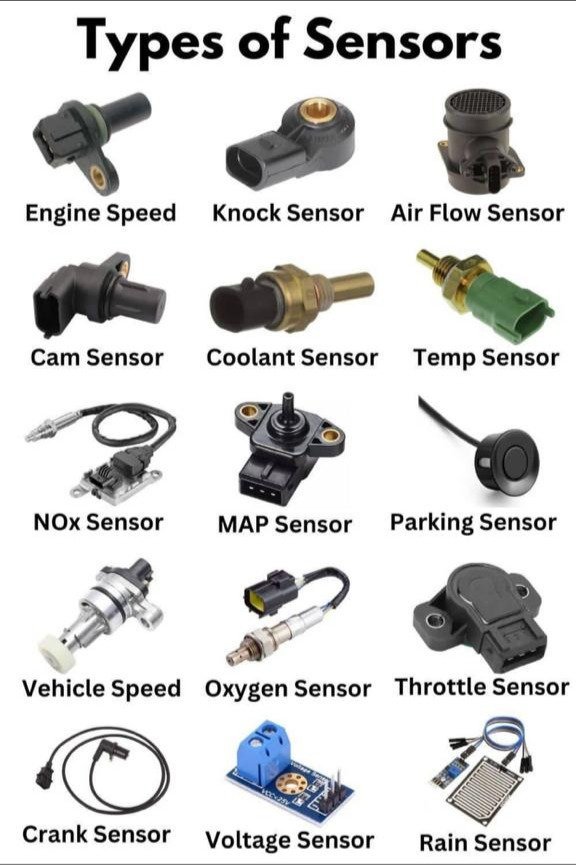
These add roughly 50 to 100 parts to the count but are responsible for maximizing fuel efficiency.
An engine’s metal parts need constant cooling and lubrication. Major components include:
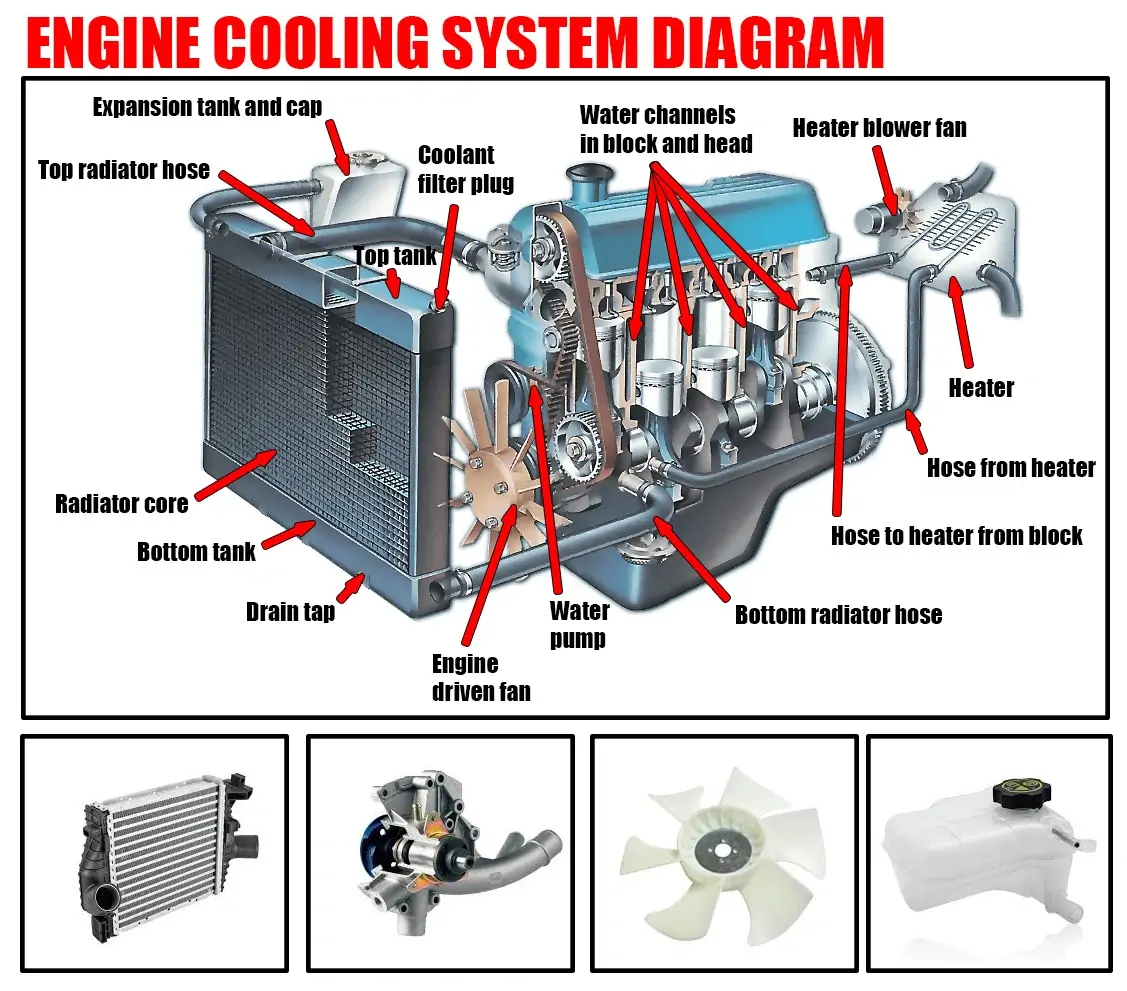
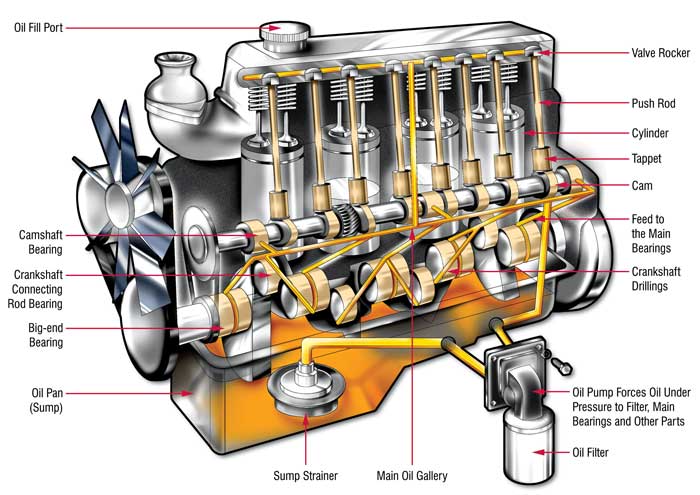
Modern engines rely on precise management of air and fuel, as well as careful exhaust routing. Key parts here include:
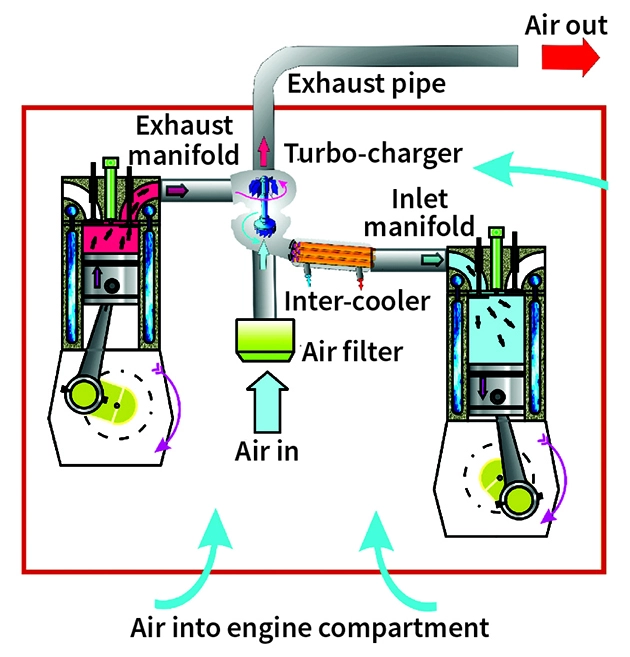
For an I4, expect roughly 4–8 parts on intake (filter, throttle, manifold, sensors) and 4–6 on exhaust (manifold, flange, EGR) per bank of cylinders. For example, one intake manifold and throttle (2 parts) and one exhaust manifold and flange (2 parts), plus 4 injectors and pump (5 parts) gives ~9 parts for a 4-cyl fuel/air path.
These support systems handle the engine’s “life support” – providing air/fuel and removing heat and fumes. In total, fuel and intake/exhaust might add 15–30 parts to the overall engine count.
Perched atop the block is the cylinder head, which houses the valvetrain – the intricate system of valves and cams that “breathe” the engine. The head itself is 1 major part per cylinder bank. Inside it you find:
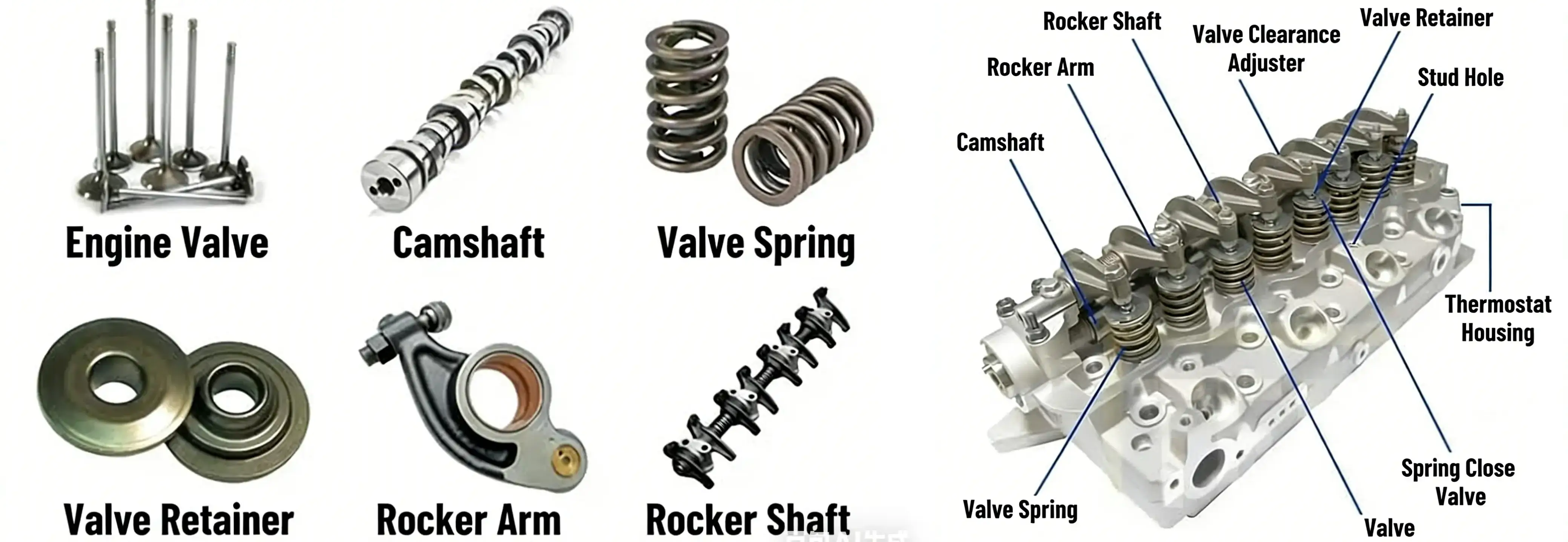
Together, the cylinder head and valvetrain control intake air and fuel and expel exhaust gases in sync with piston movement. The intricacy is high: just one cylinder head (for an I4) contains intake and exhaust ports, coolant passages, spark plug holes, and all the valve hardware. In fact, the cylinder head is often called the most complex single part in the engine). It may include on the order of 20–40 parts by itself: dozens of small valves, springs, keepers, plus the cams (if in-head).
Example count: In a 4-cylinder DOHC engine, the valvetrain might include 16 valves + 16 springs + 2 camshafts + ~16 followers/rockers + timing chain/belt and gears. That easily approaches 50–60 parts in this subsystem. In simpler engines (OHV V8, say), the numbers differ (fewer camshafts, one pushrod per valve, etc.), but the scale remains hundreds of components.
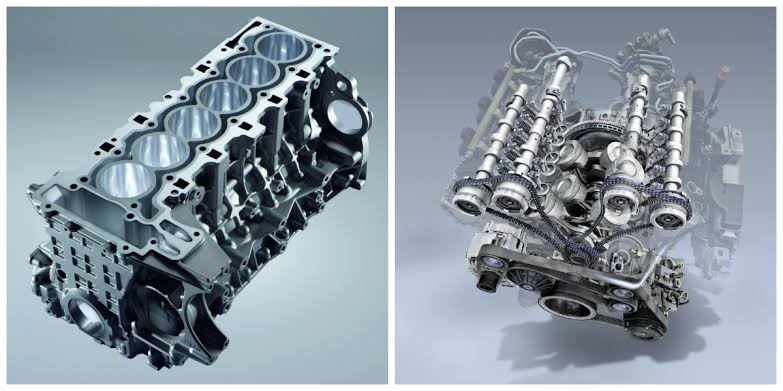
In short, as engine technology becomes more advanced (turbocharging, hybrid systems, variable valve timing, etc.), new parts are added (sensors, actuators, electronic controls, additional hardware) even as some older parts remain. So the total parts count increases with more features.
The Shift: ICE vs. Electric Parts Count
We cannot discuss engine parts today without comparing them to the electric drivetrains taking over our roads. The difference in complexity is staggering.
| Vehicle Type | Approx. Moving Parts | Total Drivetrain Parts | Maintenance Complexity |
|---|---|---|---|
| Gasoline (ICE) | ~200+ | ~2,000+ | High (Oil, Belts, Plugs) |
| Electric (EV) | ~20 | ~50-100 | Low (Coolant, Bearings) |
This reduction in parts is why EVs generally require less maintenance—there are simply fewer things to break.
To summarize, here’s a rough table of part counts for a typical 4-cylinder engine (inline-4, gasoline):
| Subsystem | Key Parts Included | Approx. Number of Parts |
|---|---|---|
| Block & Head (static) | Engine block, cylinder head, head gasket | ~2 (1 block + 1 head) |
| Rotating Assembly | Crankshaft, 4 pistons, 4 rods, ~12 piston rings, bearings, oil pan, flywheel | ~20–30 |
| Valvetrain | Camshaft(s) (1–2), valves (8–16), springs (8–16), lifters/rockers, timing chain/belt and gears | ~30–50 |
| Fuel & Intake | Fuel pump, fuel rail & injectors (4), air filter, throttle body, intake manifold | ~5–10 |
| Exhaust & Emission | Exhaust manifold, oxygen sensor(s), EGR valve (optional) | ~3–5 |
| Cooling System | Water pump, thermostat, hoses (engine-side) | ~3–5 |
| Lubrication System | Oil pump, oil filter, sump, pickup tube | ~3–4 |
| Ignition & Electronics | Spark plugs (4), coils (4), ECU (1), sensors (~6–8) | ~15–20 |
| Other (accessories) | Belts, pulleys, tensioners, alternator, etc. | ~5–10 (if counted) |
Table: Example part counts for an inline-4 engine by subsystem. Actual numbers vary by design and features. Data are illustrative.
Why should you care if it's 200 or 2,000 parts? Reliability.
According to automotive reliability engineering principles, every additional part represents a potential failure point.
A: Yes. A V8 engine has double the number of pistons, connecting rods, and often valves compared to a 4-cylinder engine. It also usually requires two cylinder heads instead of one, significantly increasing the total part count.
A: Usually, the engine block or the crankshaft is the most expensive. If the block cracks or the crankshaft warps, it often requires a total engine replacement ("short block" or "long block" replacement).
A: A typical Tesla electric motor has roughly 20 moving parts. Compare this to the 200+ moving parts in a combustion engine, which explains why electric motors rarely require mechanical service.
A: Out of the 2,000 parts, only a few are designed to wear out regularly: spark plugs, timing belts/chains, gaskets, and filters.
A: It depends on the engine design. A simple four-cylinder engine will have on the order of hundreds of parts – roughly 100–200 major components. Larger or more advanced engines (more cylinders, overhead cams, fuel injection, turbos) can easily have several hundred. Counting every bolt and gasket could push that into the thousands, but for general purposes we focus on the major assemblies.
A: Because engines vary. The part count changes with the number of cylinders, whether it’s gasoline or diesel, the valvetrain layout (SOHC vs. DOHC), and added technology (turbochargers, hybrid systems, etc.). Each variation adds or subtracts components. Rather than one number, it’s more useful to understand the categories of parts and how they multiply with engine complexity.
A: In broad terms, the main parts include the engine block and cylinder head (the large castings), the rotating assembly (crankshaft, pistons, connecting rods), the valvetrain (camshafts, valves, springs, timing chain/belt), the intake and exhaust manifolds, the fuel delivery components (pump and injectors), the cooling and lubrication components (water pump, oil pump, radiator, thermostat), and the electrical/ignition parts (spark plugs, coils, sensors, ECU). These categories cover most of what you’d see in an exploded engine view.
A: Most 4-cylinder engines have 8 or 16 valves (2 or 4 per cylinder). For example, a typical I4 with 4 valves per cylinder has 16 valves. A V6 would then have 12 or 24 valves (depending on 2 or 4 per cylinder). Each valve comes with a spring and retainer, so 16 valves means 16 springs. Thus the valvetrain alone can include 30+ parts for a modern design.
A: A diesel engine is mechanically similar in block and moving parts, but its fuel system is more robust. A diesel lacks spark plugs and coils, but has a high-pressure fuel pump and durable injectors that can handle much higher pressure. This often leads to a comparable or slightly higher part count for diesel because of the complex fuel hardware. However, some small parts (like ignition components) are absent.
A: No. The transmission is a separate assembly attached to the engine’s flywheel. While people sometimes lump it in with powertrain discussions, the transmission’s gears and clutches are not “engine parts.”
A: Absolutely. An EV motor typically has only a stator (stationary winding) and rotor (rotating shaft) – plus a housing and bearings. There are no pistons, no valves, no intake or exhaust, and no fuel or ignition systems. This dramatic reduction in moving parts is a key reason EV motors require far less maintenance than traditional engines.
A: The cylinder head is often cited as the most complex part. It contains the intake/exhaust ports, coolant passages, the entire valvetrain (valves, springs, sometimes camshafts), and mounting points for spark plugs or injectors. Casting and machining the head to precise tolerances is a major engineering feat.
A: Understanding the engine’s components helps in troubleshooting and parts ordering. If you know a cooling issue might be the water pump (1 part) versus a head gasket (1 part), you can narrow repair options. Parts buyers can cross-reference part counts with inventory: e.g., if an engine block is cracked, you might need 1 block plus 1 head gasket and 4 pistons. In short, knowing “which parts live where” makes maintenance planning much clearer.


 Xiang Lee
 Mark Thompson


 Contact Us